A product name has a small but persistent job. It appears in an introduction, a browser tab, an invitation, and a sentence spoken by someone outside the company. The product description has a different job: telling that person what the software does. Naming becomes easier when those two pieces are considered together rather than asking a single word to explain the entire business.
For an agentic product, that distinction matters because category language can carry expectations about autonomy. A name may sound broad and ambitious while the first release performs a narrow, reviewed task. The goal is to choose an identity that can last and pair it with a description that accurately explains the current offer.
Write the plain description first
Before generating names, finish a sentence with four parts: the customer, the work, the output, and the review point. For an illustrative product, that might become “Software for operations teams that prepares onboarding requests for approval.” It is not a finished headline, but it gives the naming discussion a concrete reference.
Then remove the product category words and ask whether the work is still understandable. If the sentence only says that the product enables agentic transformation, the team probably needs to clarify the offer. A name cannot resolve uncertainty about who the customer is or what happens after the customer signs in.
Keep this sentence visible during naming sessions. When someone proposes a name, read it with the description. A candidate that seems too broad in isolation may work well beside a specific line. A candidate that sounds precise may create an expectation the product cannot meet.
Decide what the name needs to carry
A descriptive name can make the category easier to infer. It can also tie the product closely to a particular task or technology. An invented name gives the team more freedom to build its own associations, but requires a clear introduction. Neither choice is automatically superior. The decision depends on how much the offer is likely to change and how customers will encounter it.
Think about the first point of contact. A product discovered through a detailed recommendation arrives with context. A name on a short event list may have very little. The less context available, the more useful a plain category line becomes. That line can appear beside an invented name without being welded into the permanent identity.
Also consider the product hierarchy. If a company will offer several related tools, decide whether the candidate names the company, the platform, or one feature. Confusing those levels creates avoidable renaming later. Write out a sample navigation and a sample customer email to see how the names coexist.
Build a small comparison sheet
Choose a manageable shortlist and score each candidate against the same questions. Can a listener repeat it? Can a reader distinguish it from nearby alternatives? Does it look clear at the size used in a product header? Can the team explain the offer in a short sentence beside it? Does it create a capability expectation that needs correcting?
Treat the scores as discussion aids, not scientific measurements. Record the reasons behind them. One person’s strong preference may reflect familiarity with a similar name, while another person’s concern may reveal an awkward pronunciation in an intended market. Those explanations are more useful than an average number without context.
Add a separate column for unresolved checks. Domain availability, potential brand conflicts, and use in intended markets should not be buried inside an aesthetic score. A candidate can be appealing and still need investigation. Acquiring a domain and establishing rights to a brand are separate matters; obtain appropriate review before committing to a public identity.
Test the spoken version without coaching
Ask a few people who resemble the intended audience to listen to the name once, then write what they heard. Do not show the spelling first. Follow with a separate reading exercise in which another person sees the word and says it aloud. The purpose is to uncover confusion, not to collect compliments.
Use ordinary conditions. A name that only works when slowly articulated by its creator may be cumbersome in introductions. At the same time, one misspelling does not prove that a candidate is unusable. Look for repeated patterns and consider whether a short correction would be natural or would dominate every conversation.
Avoid leading questions such as “Does this sound innovative?” Ask what kind of product the person expects, what they would type to find it, and which part they remember later. Save the exact responses. The gap between the intended association and the observed association can point to a better description or a different candidate.
Inspect implied capability
Words associated with automatic work can suggest that a system acts independently. Read the name alongside the first product screen and the strongest marketing claim. Does the combination imply that a person can stop supervising work that still needs review? If so, the problem may lie in the description, the feature label, or both.
The NIST AI Risk Management Framework provides a voluntary structure for considering intended use and risk. It does not prescribe product names. Its relevance here is the discipline of connecting a claim to the context in which a system is used. Naming judgment remains the team’s responsibility.
For example, “prepares a response for review” and “resolves the request” describe different outcomes. If the current product only prepares a draft, use the first description. The name can remain ambitious without making the sentence beside it inaccurate. Revisit that sentence when the product changes, using evidence from the actual release.
Try the candidate in everyday materials
Create a simple text-only set: a homepage title, a sign-in invitation, a documentation heading, an invoice reference, and a support reply. The exercise should take minutes, not a full visual identity project. It shows whether the name behaves naturally in the places where customers will see it repeatedly.
Write a sentence spoken by a customer: “The request is waiting in [name].” Then write one used by a colleague: “Send the [name] invitation.” If both require explanation, decide whether the explanation is acceptable. Product names become useful through repeated ordinary use, so ordinary sentences are a better test than a dramatic launch slogan.
An exact matching domain can help keep those references consistent. If a domain move is part of the plan, account for the operational work as well. Google’s site-move guidance recommends preparing a URL mapping and testing redirects. That guidance concerns migration, not a promise that a new name improves search performance.
Make the decision and keep a record
The final decision document can be brief: chosen name, intended pronunciation, product level, category description, target audience, and unresolved checks with owners. Include the reasons the runner-up was rejected. This keeps the team from reopening the same debate every time someone encounters the name for the first time.
Set a review point for the description rather than repeatedly reconsidering the identity. If the product’s scope changes, the first correction may be a clearer category line or a renamed feature. A stable brand is easier to build when the team knows which parts of the language are expected to evolve.
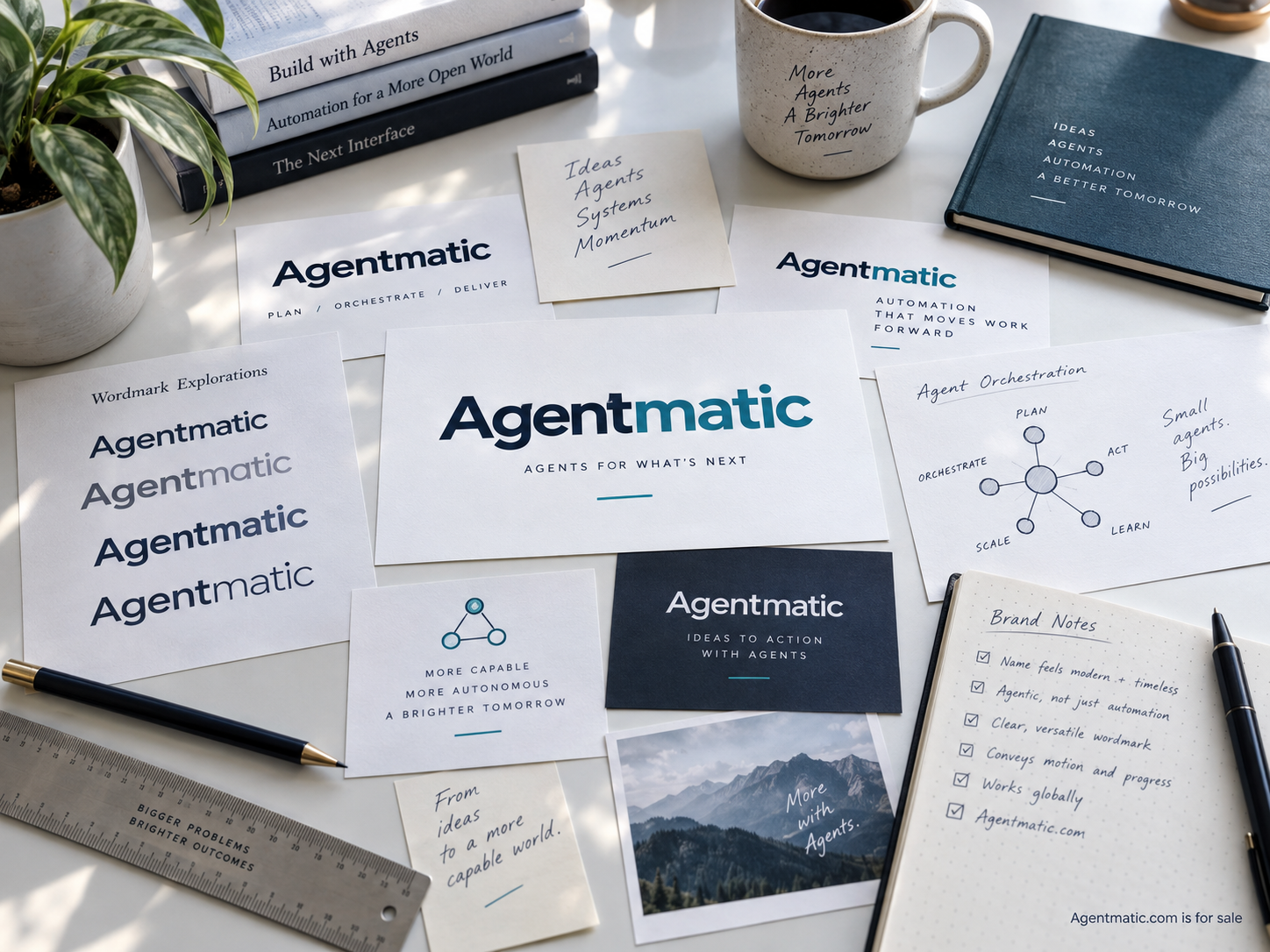
For a candidate such as Agentmatic.com, the useful next step is to write the one-line product claim before discussing visual treatments. Put the customer and output in that sentence. Then identify the human review step, if one exists. A name that works beside a truthful description gives the product a stronger starting point than a name supported only by enthusiasm.